Naviguer vers: Madeleine Parent · Hélène Pedneault
Biographie de Léa Roback
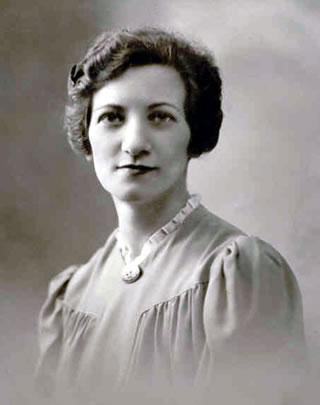
LEA ROBACK (1903-2000) Léa nait à Montréal, rue Guilbault, en 1903 de parents juifs polonais, mais elle passe son enfance à Beauport où son pàre exerce son métier de tailleur et, avec sa femme Fanny, tient un magasin général. Seule famille juive du village, avec ses neuf enfants, elle est bien accueillie par les beauportois car, comme dit Léa, « ils étaient pauvres comme nous ».
La famille revient à Montréal en 1915. Léa travaille d’abord comme réceptionniste dans une teinturerie, puis comme caissière au théâtre His Majesty sur la rue Guy. Devant le théâtre, il y a un bordel et la jeune Léa fait la connaissance des prostituées, « de gentilles filles, dit-elle, car dans les années vingt il n’y a pas grand gagne-pain pour les femmes sans éducation. » Est-ce là qu’elle développe sa pensée féministe et ses convictions en faveur du droit à l’éducation et au travail qui guideront son action des années plus tard? Peut-être…
Léa vient d’une famille où on lit et où on apprécie les arts ; elle est, elle-même, férue de théâtre et de littérature. Elle parvient à économiser et décide de s’inscrire à l’Université de Grenoble en littérature en 1926.
Animée d’un esprit d’aventure hors du commun pour une femme de son époque, elle multipliera les voyages dans les années qui suivent. En 1929, elle rejoint son fràre Henri, étudiant en médecine, à Berlin. Elle y apprend l’allemand, suit des cours à l’université et enseigne le français. C’est là, pendant la montée du nazisme, que Léa se politise sérieusement : elle défile dans les rues le Premier mai 1929, se joint aux manifs de protestations des étudiants et des syndicalistes et adhàre bientôt au mouvement communiste qui représente la lutte anti-fascisme. La situation devenant dangereuse autant pour les communistes que pour les Juifs, Léa doit quitter l’Allemagne pour rentrer à Montréal à l’automne 1932.
Pendant deux ans, elle travaillera pour le Young Men Hebrew Association, puis dans une école pour délinquants dans l’état de New York. Elle visite l’URSS en 1934, s’arrête à Paris pour contacter des groupes anti-fascistes, passe par New York, puis s’établit définitivement à Montréal.
Il faut dire : « Je vais agir parce que mon for intérieur l’exige »,
Penser : « Bon gré mal gré, je le fais. Si ça réussit, bravo !
Sinon, je m’y reprendrai d’une autre façon ou j’en ferai mon deuil ».
C’est tellement triste les gens qui ne connaissent pas l’enthousiasme.
On lui confie alors la responsabilité de tenir la librairie marxiste Modern Book Shop sur la rue Bleury au sud de Sainte-Catherine. Léa est de tous les combats et, aux élections fédérales de 1935, elle travaille pour le candidat communiste Fred Rose dans la circonscription de Cartier.
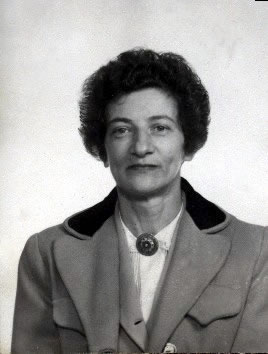
Le militantisme communiste a son prix et Léa ne compte pas les descentes de la police pendant les chasses aux sorcières anti-communistes du gouvernement d’Union nationale. Jusqu’à la fin de sa vie, elle a regretté la disparition des livres qui ont été saisis. Pour comprendre l’attrait du Parti communiste, ici comme ailleurs, il faut se rappeler la montée du fascisme et de l’anti-sémitisme, les exercices des hommes en chemises noires arborant la croix gammée au Parc Lafontaine, les vitrines brisées des commerces juifs par les étudiants de l’Université de Montréal, dont la librairie de Léa, et la complaisance des forces de l’ordre devant cette violence. Léa devient membre active de Solidarité féminine, une organisation de femmes qui s’occupait particulièrement du quotidien des familles nécessiteuses affectées par le chômage.
À Montréal, la dépression économique perdure et la situation de la classe ouvrière n’en finit pas de se dégrader. À l’automne 1936, l’Union internationale des travailleuses du vêtement pour dames (UIOVD-ILGWU), qui a son siège à New York, commence une campagne d’organisation dans toute l’industrie à Toronto, Winnipeg et Montréal. La main d’oeuvre presqu’entièrement féminine, travaille dans des lieux insalubres et est honteusement exploitée. Le syndicat dépêche l’organisatrice Rose Pesotta de New York, mais celle-ci ne parle pas français ; Léa est la personne idéale pour l’assister et joue un rôle clé car elle peut s’adresser en français aux travailleuses francophones qui constituent 60% des 5000 travailleuses autant qu’en yiddish et en anglais aux autres travailleuses en grande majorité juives. Après trois semaines, une convention collective est signée et les grévistes peuvent célébrer. Un an plus tard, le contrat sera brisé devant un syndicat affaibli par les purges anti-communistes. Léa quittera les travailleuses du vêtement en 1939 sans toutefois abandonner la lutte pour améliorer la condition des travailleuses.
En 1942, Léa travaille à la chaine à l’usine RCA Victor de Saint-Henri, qui compte 4000 travailleurs dont 40% sont des femmes. À quelques rues de l’usine se trouve aujourd’hui la rue Léa-Roback. L’organisatrice réussit, sans avoir à recourir à la grève, à y instaurer un syndicat industriel mais, comme elle le dit : « C’est impossible de dire c’est telle ou telle personne, c’est elle qui a organisé, jamais. C’est toujours, toujours la base […] Si les gens ne veulent pas, on ne peut pas les pousser. »
J’ai toujours été avec les ouvriers et les ouvrières.
Je ne voulais pas sortir des rangs.
Je voulais pouvoir dire « nous » et que ce soit nous.
Malgré tous ses talents pour mobiliser les travailleuses, Léa a toujours refusé d’être permanente syndicale et de monter dans la hiérarchie. Elle n’a jamais voulu occuper d’autres fonctions syndicales que celles qui l’amenaient à être sur le terrain. Elle disait : «J’ai toujours été avec les ouvriers et les ouvrières […] J’aimais être au coude à coude avec les personnes avec qui je travaillais […] Je ne voulais pas sortir du rang […] Je voulais pouvoir dire «nous » et que ce soit nous. »
Encore une fois, en 1943, elle participe à la campagne électorale de Fred Rose pour le Parti progressiste-ouvrier, le nouveau nom du Parti communiste, et cette fois c’est le triomphe : Rose est élu député de Montréal-Cartier. Elle prendra peu à peu ses distances avec le Parti communiste qu’elle quittera définitivement en 1958.
À l’armistice de 1945 succède la Guerre froide qui suscite un grand mouvement pacifiste. En 1960 des Canadiennes fondent Voice of Women, qui devient La Voix des Femmes à Montréal qui regroupe des femmes anglophones, francophones comme Thérèse Casgrain, et des polyglottes comme Léa. Elle y jouera un rôle actif : on la voit dans les rues protester contre la militarisation, les armes nucléaires, la guerre du Vietnam et distribuer des tracts contre les jouets militaires. Comme toujours, Léa parle aux gens, explique, garde son sang-froid et son sourire devant des passants pas toujours aussi polis qu’elle.
L’important, c’est d’apprendre à être humain,
apprendre que les autres, c’est du monde comme nous.
La lutte contre l’apartheid l’a aussi mobilisée pendant des années et elle a connu la joie de la victoire lors de la libération de Nelson Mandela en 1990. Elle n’a jamais cessé de défendre l’équité salariale et le droit à l’avortement.
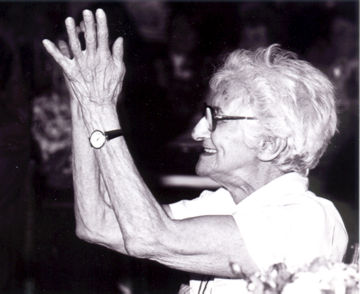
D’une vivacité extraordinaire, tant physique que mentale, Léa est demeurée active jusqu’à ce qu’un accident fatal vienne mettre fin, trop tôt, à une vie bien remplie, le 28 août 2000 à 96 ans.
Léa Roback a été une progressiste en avance sur son temps. Son engagement a toujours été fondé sur la solidarité et l’action. Il a été politisé, tourné vers l’avenir et résolument féministe. Il était nourri d’optimisme et ancré dans la certitude d’être du côté de la justice et la conviction de construire un monde meilleur. « C’est drôle, confiait-elle lors d’un entretien, mais je n’ai jamais senti […] ça ne vaut pas la peine. Ça n’a jamais été pour moi. »
Voyez là-bas par la fenêtre !
Regardez le firmament, il y a beaucoup de gris n’est-ce pas?
Mais aussi, le voyez-vous, entre le noir gris
Et le gris blanc, il y a du bleu.
Eh bien, moi, je me concentre sur le bleu.
La cinéaste Sophie Bissonnette a réalisé un documentaire sur Léa Roback : Des Lumières dans la grande Noirceur (A Vision in the Darkness) aux Productions Contre-Jour, 1991.
Nicole Lacelle a publié aux éditions du remue-ménage en 1988 ses entretiens avec Madeleine Parent et Léa Roback.
Madeleine Parent et Léa Roback, amies de cœur et d’engagement
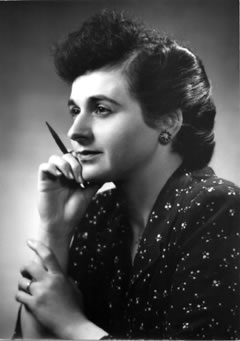
Photographie A. G. Nakash
Quand Léa Roback a demandé en 1939 à être présentée à Madeleine Parent à l’issue d’une réunion, elle ne se doutait probablement pas qu’elle s’apprêtait à jeter les bases d’une amitié durable et à donner le coup d’envoi à un parcours militant hors du commun.
L’histoire retiendra sûrement de la vie de Madeleine les grèves du textile à la fin des années quarante et au début des années cinquante et la lutte acharnée que lui a livré Duplessis l’accusant de sédition ce qui lui avait valu l’emprisonnement.
Il faudra aussi se souvenir de sa contribution remarquable au développement du syndicalisme autonome canadien et québécois. Quand elle fonde, en 1969, la Confédération des syndicats canadiens avec Kent Rowley, son compagnon de vie et de luttes, 70% des travailleurs sont syndiqués dans des organisations syndicales filiales de grands syndicats américains. Aujourd’hui ils sont dans la même proportion membres de syndicats exclusivement canadiens et québécois.
Impossible, non plus, d’oublier son engagement dans la cause des femmes, de toutes les femmes, en particulier les femmes autochtones et immigrantes, qu’elle a défendue sur toutes les tribunes et dont elle avait épousé les revendications.
Mais ce qu’il faut surtout garder en mémoire c’est sa ténacité inflexible, son engagement indéfectible dans les causes qui lui étaient chères et son attachement à la Fondation Léa-Roback dont elle a été membre fondatrice, membre du Conseil d’administration jusqu’en 2009 puis membre honoraire. Comme elle me le disait elle-même lors d’une de mes visites : « Soutenir la Fondation c’est encore une façon de rester militante et de garder vivante mon amitié avec Léa. »
Madeleine nous a quitté. La tristesse a bien sûr sa place dans nos cœurs, mais aussi, sinon plus, la fierté. Fierté d’avoir connu une pionnière de sa trempe. Fierté de pouvoir vivre dans une société qu’elle a contribué à faire évoluer dans le sens d’une plus grande égalité pour les femmes, de la justice et de la solidarité.
Le Conseil d’administration de la Fondation Léa-Roback
Lorraine Pagé, présidente.
Madeleine, tisserande de solidarités
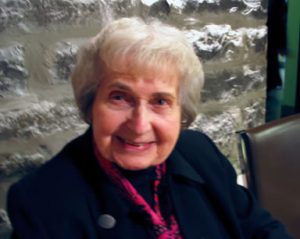
Photographie : Sandra Salomé ©
Née à Montréal en 1918, Madeleine Parent se révèle très tôt une militante déterminée. De 1937 à 1940, alors qu’elle est étudiante à l’université McGill, elle milite, entre autres, pour que le gouvernement fédéral accorde des bourses d’études universitaires aux enfants de familles défavorisées.
En 1942, elle dirige, en compagnie de Kent Rowley, qu’elle épousera en 1953, un mouvement de syndicalisation des 6 000 ouvrières et ouvriers à l’emploi de la Dominion Textile dans les usines de Montréal et de Valleyfield. La grève de 1946 est très dure, particulièrement à Valleyfield, mais elle se termine après cent jours, par la victoire du syndicat et la signature des premières conventions collectives dans ces usines.
Lors de la grève de 1947, à Lachute, le premier ministre Maurice Duplessis fait arrêter Madeleine Parent et Kent Rowley et les accuse de « conspiration séditieuse » en les associant à la « menace communiste ». Les procédures judiciaires se terminent en 1955 par un verdict de non-culpabilité. Mais pendant ces années, le travail syndical au Québec devient difficile, puis impossible pour Madeleine et Kent, le syndicat américain (plus tard condamné pour corruption) les ayant expulsés de ses rangs en 1952, en pleine grève des ouvrières et ouvriers des filatures de coton.
C’est donc en Ontario que Madeleine et Kent poursuivent leur travail de syndicalistes au cours des années 1960 et 1970. Ils contribuent au développement d’un syndicalisme canadien autonome des syndicats américains.
Après la mort de Kent Rowley, en 1978, Madeleine continue de participer à la formation de la relève syndicale jusqu’à sa retraite, en 1983. Elle s’installe alors définitivement au Québec. Son engagement militant se concentre alors sur la lutte contre toutes les formes de discrimination envers les femmes, tant au Québec qu’au Canada. Pacifiste, elle prend position contre les conflits armés qui sévissent à travers le monde.
La peintre québécoise Marcelle Ferron, signataire du Refus global, a fait le commentaire suivant : « La plus grande figure de l’époque, celle qui a le plus fait pour changer le Québec, n’est pas parmi les signataires du Refus global, c’est la syndicaliste Madeleine Parent qui menait à l’époque les grèves dans le textile. »
C’est en ce sens que Madeleine Parent est une figure emblématique du mouvement syndical et de plusieurs luttes marquantes pour la défense des droits.
Madeleine, pionnière
Membre du conseil d’administration de la Fondation Léa-Roback depuis le début, Madeleine Parent en a été l’une des fondatrices. Son nom est associé tout naturellement à celui de Léa, car elles ont lutté pour les mêmes causes et elles sont demeurées unies par une amitié indéfectible.
Madeleine a participé aussi longtemps que sa santé le lui a permis, aux activités de la Fondation. La mission de la Fondation ainsi que sa vitalité financière lui tenaient à cœur. C’est ainsi qu’à l’hiver 2009 elle a fait don à la Fondation de biens personnels, notamment des meubles de valeur.
Madeleine est décédée le 12 mars 2012.
Hélène Pedneault est toujours vivante
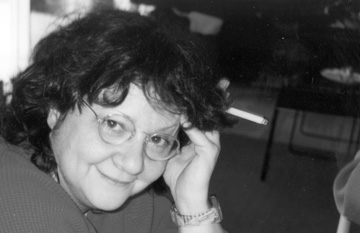 Hélène Pedneault est décédée le 1er décembre 2008. Née à Jonquière le 1er avril 1952, cette grande Québécoise, inséparablement femme de paroles et femme d’actions, indépendantiste, journaliste et écrivaine, environnementaliste et féministe est toujours aussi vivante, ses engagements transcendant son départ.
Hélène Pedneault était une femme debout…jusqu’à la démesure. Elle était dérangeante, exubérante, engagée et portait en elle la force de l’indignation, le pouvoir de la révolte, la vigueur de la parole. Les causes qui lui tenaient à cœur étaient multiples et essentielles; ses combats, tenaces et authentiques. Désignée à titre posthume par la Société Saint-Jean-Baptiste de Montréal Patriote de l’année 2009, son nom demeure indissociable de la Vie en rose ou de la Coalition Eau Secours .
Chaque jour, des occasions surgissent qui l’auraient incitée à prendre la plume ou le micro pour dénoncer, convaincre, mobiliser. Nous sommes maintenant privés de ses colères et de son indignation, de ses élans du cœur, de son humour caustique et de ses analyses foudroyantes.
Dans son Mon enfance et autres tragédies politiques, Hélène Pedneault écrivait : « L’indignation organise la colère, oriente son feu, le documente jette les cris inutiles aux vidanges, et donne du souffle seulement aux colères qui sont facteurs de changement. La colère peut être stérilisante; l’indignation, féconde. La colère est une sprinteuse; l’indignation est une marathonienne. La colère a la durée de vie d’une allumette; l’indignation, celle d’une flamme olympique. Je pourrais vous en parler longtemps. Je pratique les deux depuis le liquide amniotique et peut-être même avant. » Nous retrouvons bien là ce qui était à la source de ses combats : l’indignation.
Indépendantiste de la première heure, dans sa Lettre d’amour au Québec, elle laissait courir une plume remplie d’émotion : « C’est par amour que je te veux libre. C’est ce que tous les amoureux du monde devraient se dire. Je te veux poète, voyageur, créateur et original, les bras ouverts et le verbe haut. Prouve-moi qu’un pays sur le point de naître n’est pas obligé d’adopter les vieux réflexes des pays qui croulent sous les siècles. Toi et moi, nous ferons du neuf, promis. De l’inédit. De l’étonnant. De l’amoureux. »
Cofondatrice de la Coalition Eau Secours!, elle a anobli le terme Porteurs et porteuses d’eau et nous a rappelé que : « Comme la langue, l’eau est un symbole fondamental, qui fait partie non seulement de notre patrimoine, mais aussi de notre inconscient collectif. L’eau nourrit les corps, les imaginaires, la littérature, le cinéma, les chansons. S’y attaquer, c’est blesser ce que nous avons de plus précieux, c’est voler notre identité. Vouloir toucher l’eau au Québec, c’est comme vouloir toucher à la langue française, comme si l’eau était notre langue maternelle. »
La féministe qu’elle était, celle qui écrivait Les chroniques délinquantes dans La vie en rose et « Du pain et des roses Pour changer les choses […] Pour qu’on se repose Du pain et des roses », devenue une chanson emblématique de la cause des femmes, ne pouvait renoncer, malgré la silence que la mort lui imposait, à son engagement féministe tant il était vital et indéfectible; elle a poursuivi sa marche.
C’est ainsi qu’il faut voir le geste qu’elle a posé en faisant de la Fondation Léa-Roback sa légataire universelle. En associant son nom à la Fondation, créée en l’honneur d’une syndicaliste et d’une féministe de la première heure qu’elle aimait et admirait, et qui remet chaque année des bourses d’études à des femmes socio-économiquement défavorisées et socialement engagées, elle a exprimé par l’action ce qu’elle avait déjà écrit : « L’éducation est plus qu’un droit, c’est un devoir. »